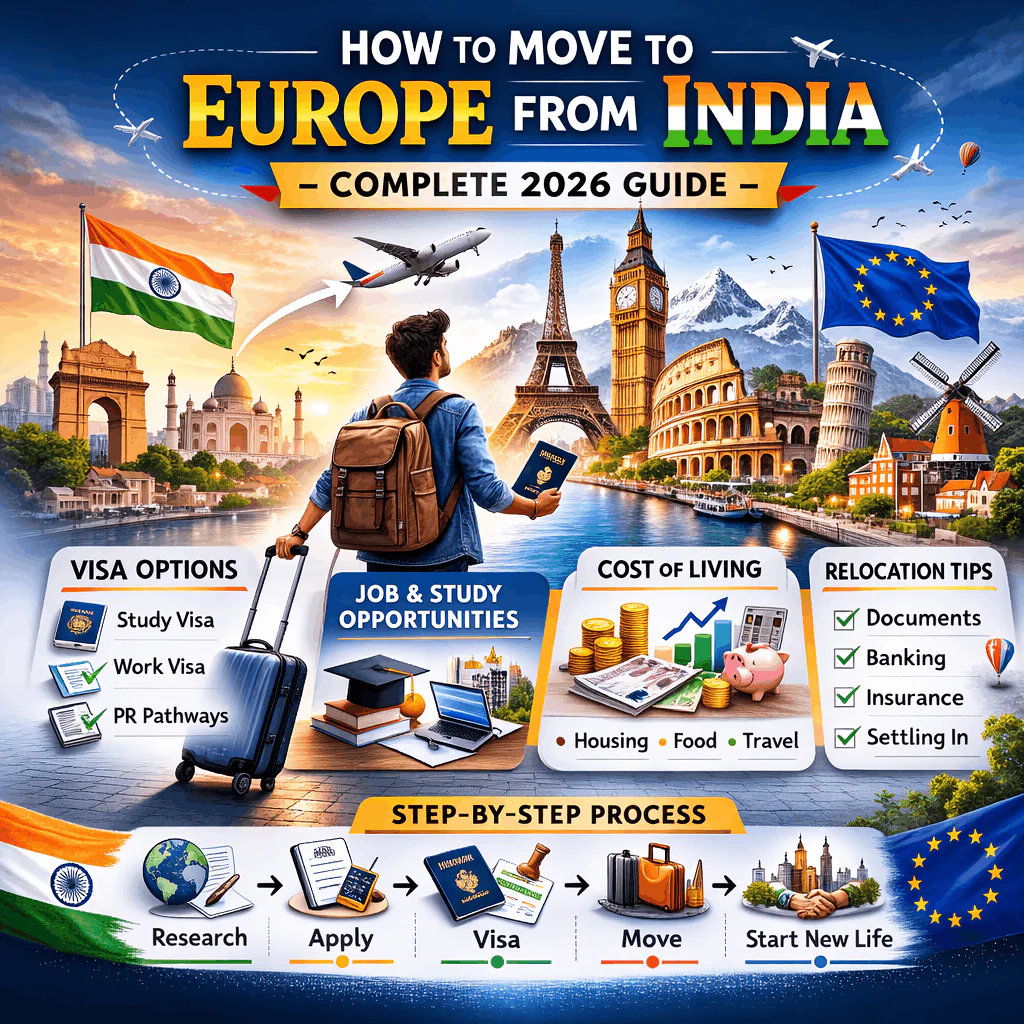
How to Move to Europe from India. Complete 2026 Guide
In recent years, more citizens are planning to move to Europe from India for better opportunities and global exposure. Whether for professional growth, higher earnings, or a better lifestyle, Europe has become a preferred destination for skilled individuals and families.
Moving to Europe from India is no longer limited to students or IT professionals. Engineers, healthcare workers, entrepreneurs, and skilled tradespeople are increasingly choosing to move for long-term stability and career advancement.
One of the biggest attractions is career growth. European countries offer structured career paths, strong labor laws, and competitive salaries. Along with higher income, individuals enjoy better work-life balance and access to world-class healthcare and education. For many, living in Europe means financial security and a high quality of life.
Multiple European residency options are available depending on your purpose: work, study, business, or family reunification. Understanding the right pathway and meeting visa requirements is the first step in your journey.
Why Move to Europe from India?
Higher Earning Potential
Compared to average salaries in India, many European nations offer significantly higher compensation. Skilled professionals in technology, healthcare, and engineering often earn two to four times more than they would in India. This makes settling in Europe financially attractive.
Work-Life Balance
European countries are known for regulated working hours, paid leave, and employee rights. A healthy balance between professional and personal life is a major reason many Indians choose to immigrate to Europe for long-term relocation.
PR & Citizenship Pathways
Many countries offer structured permanent residency routes after a few years of legal stay. Once you secure residency, you can transition toward citizenship, depending on the country’s regulations.
Global Exposure and Lifestyle Benefits
Living in a multicultural environment enhances personal growth and global networking opportunities. Access to Schengen travel, advanced public infrastructure, and strong social systems also make Europe appealing for families.
Best European Countries to Move to from India
When evaluating the best countries on how to move to Europe from India, several destinations stand out for job opportunities and residency benefits.
Germany
Germany remains one of the top choices for skilled professionals.
- Job Seeker Visa / Opportunity Card allows qualified individuals to enter Germany and search for employment.
- Strong demand for engineers, IT specialists, and healthcare workers.
- Competitive salary ranges across industries.
Germany also offers long-term residence pathways for professionals contributing to its workforce.
Netherlands
The Netherlands is known for its innovation-driven economy.
- Highly Skilled Migrant Visa for qualified professionals.
- English-friendly work environment.
- Strong startup ecosystem and multinational presence.
Ireland
Ireland has become a European tech hub.
- Critical Skills Employment Permit for in-demand occupations.
- Excellent opportunities in IT and healthcare sectors.
- Clear residency progression routes.
Portugal
Portugal is gaining popularity for its affordability and quality of life.
- Work Visa options for employed professionals.
- Visa for passive income holders.
- Growing digital nomad and remote work culture.
Sweden
Sweden is known for innovation and sustainability.
- Work Permit for skilled professionals.
- Strong technology and research sectors.
- High living standards and social benefits.
Visa Options to Move to Europe from India
There are several legal pathways available:
Job Seeker Visa
A Job Seeker Visa allows qualified professionals to enter a European country without a confirmed job offer and search for employment within a specific time frame (usually 6–12 months).
Work Permit
A Work Permit is issued to candidates who already have a confirmed job offer from a European employer.
EU Blue Card
The EU Blue Card is designed for highly qualified professionals with advanced skills and higher salary packages.
Student Visa
A Student Visa allows international students to pursue higher education at universities and colleges in Europe.
Family Reunification Visa
A Family Reunification Visa enables legal residents or citizens to bring close family members to live with them
Step-by-Step Process to Move to Europe from India
- Choose the right country based on profession and goals.
- Review eligibility under the applicable European immigration process.
- Prepare documents such as IELTS scores, degree evaluations, and financial documents.
- Submit a visa application.
- Attend biometrics and interviews if required.
- Receive approval and begin planning your relocation.
Cost of Move to Europe from India
Before relocating to Europe, budgeting is essential.
- Visa application fees.
- Travel expenses.
- Initial accommodation deposits.
- Health insurance coverage.
- Documentation and translation costs.
The cost of living in Europe varies by country. Germany and Portugal may offer moderate living expenses, while cities in Ireland and the Netherlands can be higher. Average monthly expenses depend on lifestyle, accommodation type, and the chosen city.
In-Demand Jobs in Europe for Indians
Several sectors are actively hiring international talent:
- IT Professionals
- Healthcare Workers
- Engineers
- Hospitality Sector employees
- Skilled Trades workers
Professionals with relevant experience and recognized qualifications have strong prospects for long-term employment and residency.
Challenges Indians Face While Move to Europe from India
While opportunities are significant, challenges include the following:
- Language barriers in non-English-speaking countries
- Cultural adjustment
- Recognition of qualifications
- Visa processing timelines
Planning and proper documentation can help overcome these obstacles.
PR and Citizenship in Europe
How Long Does PR Take?
Permanent residency typically requires 3–5 years of legal stay, depending on the country.
Countries with Easier PR Pathways
Germany and Portugal offer structured pathways for skilled professionals and long-term residents.
Citizenship Timeline
Citizenship eligibility generally ranges from 5 to 10 years, subject to integration requirements and language proficiency.
Conclusion
Europe offers strong career opportunities, financial growth, and a stable lifestyle for skilled individuals and families. With multiple residency options, structured legal pathways, and growing demand for global talent, now is a strategic time to consider immigration to Europe.
Choosing the right country, understanding the legal framework, and preparing proper documentation are essential steps. With proper planning, you can successfully settle in Europe and build a secure future abroad.
FAQs
Yes, some countries offer job seeker pathways.
Not always, but English proficiency may be required depending on visa type.
This depends on profession, financial status, and chosen residency route.
Financial proof varies according to visa category and country regulations.