
New Zealand Jobs: The Complete Guide for Foreigners & Indians (2026)
1. Introduction
New Zealand is one of the most beautiful countries in the world. But it is not just about green hills and blue oceans. It is also a land rich in job opportunities. Every year, thousands of people from around the world come to New Zealand to work and build a better life.
Whether you are already living in New Zealand, planning to move there, or just curious about what is available, this guide is for you.
New Zealand jobs are available in many fields, from hospitals and farms to offices and tech companies. The country has a growing economy and a real need for skilled workers. That is why New Zealand jobs for foreigners are more accessible than in many other countries.
If you are from India and wondering about New Zealand jobs for Indians, you will find a lot of good news in this guide. India is one of the top countries whose workers are welcomed in New Zealand, especially in healthcare, IT, and engineering.
In this article, you will learn:
- What the New Zealand job market looks like right now
- Which jobs are in the highest demand
- How foreigners and Indians can find and apply for jobs
- What visa options are available, including New Zealand jobs with visa sponsorship
- Where to search for New Zealand job vacancies online
- How much you can expect to earn
- What life in New Zealand is really like
Let us get started.
2. New Zealand Job Market Overview
The Economy in 2025
New Zealand has a stable and strong economy. As of 2025, the country’s unemployment rate sits around 4 to 5 per cent, which is quite low compared to many other nations. This means most people who want a job can find one.
The country earns money from farming, tourism, technology, and trade. After some slow years post-pandemic, New Zealand’s economy is picking up speed again. New businesses are opening, and the government is investing in infrastructure, healthcare, and education.
This growth is creating more and more New Zealand job vacancies across the country. Employers are actively looking for both local and international talent.
Key Industries Driving Employment
Several industries are growing fast and hiring many workers:
- Healthcare: Hospitals and clinics need more nurses, doctors, and support staff
- Construction: New buildings, roads, and homes are being built across the country.
- Technology: Software companies and startups are growing rapidly.
- Agriculture: Farms and orchards need seasonal and full-time workers.
- Tourism and hospitality: Hotels, restaurants, and tour companies need staff year-round.
- Education: Schools and universities are hiring teachers and support staff.
Where Are the Jobs Located?
Jobs are spread all across New Zealand, but certain cities are bigger job hubs than others:
Auckland is the largest city and has the most jobs in finance, technology, retail, and business. It is the commercial heart of the country.
Wellington, the capital city, is home to government departments, public service roles, and media companies.
Christchurch is the main city in the South Island. After the 2011 earthquake, the city was rebuilt from scratch. Today, there are lots of jobs in construction, engineering, and logistics.
Hamilton, Tauranga, and Dunedin are smaller cities with their own growing job markets, often with lower competition and a relaxed lifestyle.
3. Top Industries and In-Demand Jobs in New Zealand
If you want to find a job quickly, it helps to know which jobs are most needed. Here is a breakdown of the top sectors and roles.
Healthcare and Nursing
New Zealand has a serious shortage of healthcare workers. Registered nurses, general practitioners, specialists, and aged care workers are all in high demand. This is great news for those looking at New Zealand jobs for foreigners with a medical background.
Nurses from countries like India, the Philippines, and the UK are regularly recruited. If you have a nursing or medical degree and registration, your skills are highly valued.
IT and Software Development
Tech is booming in New Zealand. Software developers, data analysts, cybersecurity experts, and cloud engineers are some of the most sought-after professionals right now. Auckland and Wellington both have growing tech hubs.
For Indians with IT backgrounds, this is a golden opportunity. Many Indian tech professionals already work in New Zealand and have carved out successful careers in the sector.
Construction and Engineering
The country urgently needs civil engineers, structural engineers, project managers, electricians, and plumbers. The government is funding large infrastructure projects, and there is no shortage of work.
Many New Zealand jobs with visa sponsorship are available in this sector because local talent simply cannot fill all the open roles.
Agriculture and Horticulture
Farming is a huge part of New Zealand’s economy. The country is famous for dairy, sheep farming, kiwifruit, and apples. Seasonal workers are needed for harvesting, planting, and farm maintenance.
This is one of the easiest ways to enter the New Zealand workforce, especially on a Working Holiday Visa.
Education and Teaching
Qualified teachers — especially in primary, secondary, and special education — are needed across the country. Those with a recognised teaching qualification can often find work quickly.
New Zealand jobs for Indians in the education sector are growing too, especially for those who can teach STEM subjects (Science, Technology, Engineering, and Maths).
Hospitality and Tourism
Hotels, cafes, restaurants, and tour operators are always hiring. While salaries in hospitality are moderate, this sector is a great entry point for those new to the country. Working holiday makers often start here.
Finance and Accounting
Accountants, auditors, financial analysts, and banking professionals are in demand in Auckland and Wellington. New Zealand’s finance sector follows international standards, so those with globally recognised qualifications can adapt easily.
4. New Zealand Jobs for Foreigners and Immigrants
One of the most common questions people ask is: “Can foreigners really get jobs in New Zealand?” The answer is yes — and in many cases, employers are actively looking for overseas talent.
Who Can Work in New Zealand?
- New Zealand citizens and permanent residents can work anywhere without restrictions.
- Residents with open work conditions can work for any employer.
- Visa holders — can work if their visa includes work rights (many do)
- Accredited Employer Work Visa holders can work for a specific employer who is approved by Immigration New Zealand
The Skill Shortage List
Immigration New Zealand publishes a list called the Green List (formerly the Long Term Skill Shortage List). This list includes job roles that are in short supply in New Zealand. If your job is on this list, it is much easier to get a visa and find an employer willing to hire you.
Jobs currently on the Green List include:
- Registered nurses
- Software engineers
- Civil and structural engineers
- Construction project managers
- Secondary school teachers
- Midwives
- Veterinarians
If your job is on this list, your path to New Zealand jobs for foreigners becomes significantly smoother.
English Language Requirements
New Zealand is an English-speaking country. Most jobs require you to communicate clearly in English, both in writing and speaking. Some visa types require you to demonstrate your English proficiency through tests such as IELTS or PTE.
For New Zealand jobs for Indians, language is generally not a barrier. Most Indians have a good command of English, which gives them a strong advantage in the hiring process.
5. Work Visa Options for New Zealand
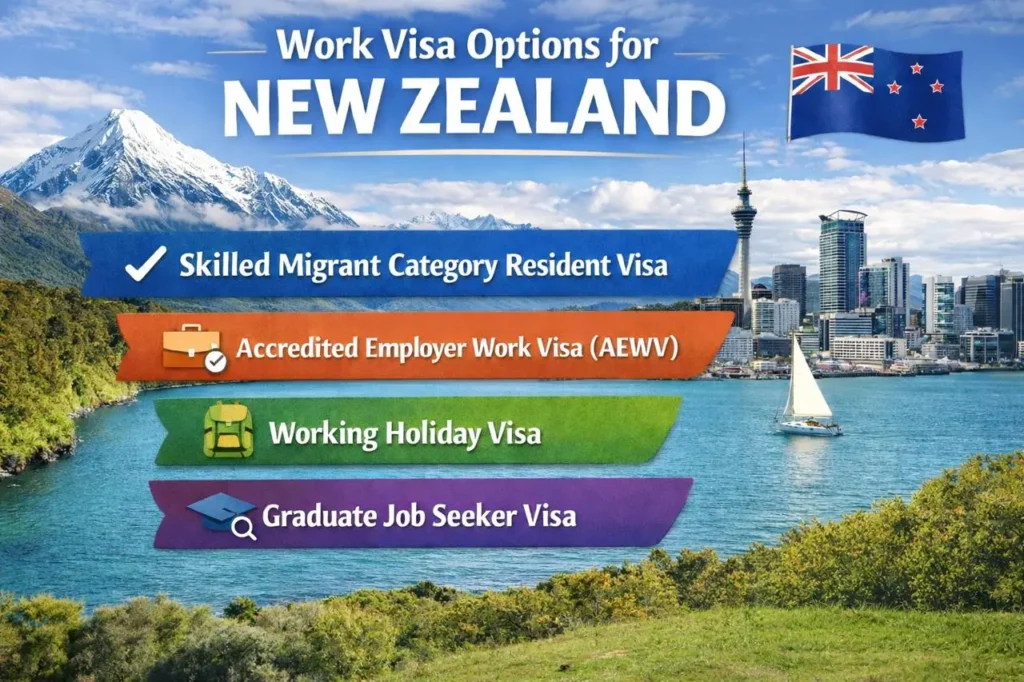
To work in New Zealand as a foreigner, you usually need a work visa. Here are the main options available in 2025.
1. Skilled Migrant Category Resident Visa
This is for people who want to become permanent residents. It is a points-based system. You earn points based on your age, work experience, job offer, and qualifications. If you score enough points and get a job offer, you can apply for residency.
This visa is ideal for those looking for a long-term career in New Zealand.
2. Accredited Employer Work Visa (AEWV)
This is the most common visa for overseas workers in 2025. To get this visa:
- You need a job offer from an employer accredited by Immigration New Zealand.
- The employer must show they could not find a suitable local worker.
- Your job must meet a minimum salary threshold.
Many New Zealand jobs with visa sponsorship are offered through this visa pathway. Accredited employers can sponsor foreign workers, making the process much easier.
3. Working Holiday Visa
If you are between 18 and 35 years old and from an eligible country, you can apply for a Working Holiday Visa. This allows you to work and travel in New Zealand for up to 12 months (or up to 23 months for some nationalities).
India is on the eligible country list for Working Holiday Visas, which is great news for young Indians wanting to explore work and travel in NZ.
This visa is a popular first step for many people who later apply for a more permanent work visa.
4. Graduate Job Seeker Visa
If you have recently completed a qualification in New Zealand, you can apply for a Graduate Job Seeker Visa. This gives you time to stay in New Zealand and look for a job that matches your study area.
It is a stepping stone between finishing your studies and getting a full work visa.
6. Average Salaries in New Zealand (By Sector)
One of the big questions for anyone thinking about moving to New Zealand is: “How much will I earn?”
Here is a look at average annual salaries across key sectors (2025 estimates, in NZD):
| Job Role | Average Annual Salary (NZD) |
|---|---|
| Registered Nurse | $65,000 – $90,000 |
| Software Developer | $85,000 – $120,000 |
| Civil Engineer | $80,000 – $110,000 |
| Teacher (Secondary) | $60,000 – $90,000 |
| Accountant | $65,000 – $100,000 |
| Construction Manager | $90,000 – $130,000 |
| Chef / Cook | $45,000 – $65,000 |
| Farm Worker | $40,000 – $55,000 |
| Retail / Hospitality | $40,000 – $55,000 |
Salaries vs. Cost of Living
New Zealand pays well, but the cost of living — especially in Auckland — is also high. Here is a quick picture:
- Rent: A one-bedroom apartment in Auckland costs around NZD $2,000 – $2,500 per month. In smaller cities, it can be $1,200 – $1,600.
- Groceries: A single person might spend around NZD $300 – $500 per month on food.
- Transport: Monthly public transport passes cost around NZD $200.
In smaller cities like Christchurch, Hamilton, or Dunedin, your money goes much further.
Minimum Wage in 2026
The minimum wage in New Zealand as of April 2025 is NZD $23.15 per hour. This applies to all workers, including those on work visas. This ensures that no matter what job you do, you are paid fairly.
7. Where to Find New Zealand Jobs Online
Finding New Zealand job vacancies has never been easier, thanks to many great job websites and platforms. Here are the best places to look.
Top Job Boards
Seek is the biggest and most popular job site in New Zealand. Almost every employer posts their vacancies here. You can search by industry, location, salary, and visa eligibility.
Trade Me Jobs is another large platform that New Zealanders use heavily. It lists thousands of jobs across all sectors.
Indeed, it is the New Zealand version of Indeed, the global job site. It pulls listings from many different sources and is easy to use.
LinkedIn is excellent for professional roles, especially in IT, finance, and management. Many employers use LinkedIn to reach out to candidates directly. Make sure your profile is up to date.
Government Portals
Work and Income (WINZ) — workandincome.govt.nz — is the New Zealand government’s employment service. It lists job vacancies and also provides career advice and support.
Immigration New Zealand — immigration.govt.NZ is where you manage your visa applications and check your work rights.
8. How to Apply for Jobs in New Zealand
Applying for jobs in New Zealand is a bit different from other countries. Here is what you need to know.
Writing a New Zealand-Style CV
A CV in New Zealand should be:
- Short and clean — no more than 2 pages for most roles
- No photo needed — unlike some countries, photos are not expected on NZ resumes.
- No date of birth or marital status — you do not need to include personal details like these.
- Clear work history — list your jobs in reverse order (most recent first)
- Tailored to each job — change your CV slightly for each role you apply for
Keep the language simple and avoid complicated words. New Zealanders appreciate straightforward communication.
Writing a Strong Cover Letter
A cover letter is a short letter you send with your CV. It should:
- Be no longer than one page.
- Say which job you are applying for.
- Explain why you want the job and why you are a good fit.
- Show that you know a little about the company.
- End with a polite invitation to discuss further
Always personalise your cover letter. Do not use the exact same one for every job.
Interview Etiquette in New Zealand
New Zealand workplaces are quite relaxed and friendly compared to those in many countries. Some things to keep in mind:
- Be on time — punctuality is very important.
- Be yourself — interviews are often conversational, not stiff or formal.
- Ask questions — employers like candidates who are curious and engaged.
- Avoid boasting — Kiwis value modesty; focus on facts rather than self-promotion.
- A firm handshake and eye contact show confidence and respect.
After the interview, it is a good idea to send a short thank-you email within 24 hours.
9. Tips for Landing a Job in New Zealand Faster
Here are some smart strategies to speed up your job search.
Get Your Qualifications Recognised
If you studied outside New Zealand, your degree or diploma may need to be assessed by NZQA (New Zealand Qualifications Authority). This is especially important for health professionals, teachers, and engineers. Getting your qualifications officially recognised makes employers much more confident in hiring you.
Build Your Network on LinkedIn
Many jobs in New Zealand are filled through connections and word of mouth, not just job boards. Join LinkedIn groups for your industry, connect with New Zealand-based professionals, and engage with their posts. A referral from a connection can open doors that online applications cannot.
Consider Regional Roles
Jobs in smaller towns like Invercargill, Nelson, or Palmerston North often have less competition. Employers in regional areas are sometimes more open to hiring overseas candidates, including those seeking New Zealand jobs for foreigners. Once you have some local work experience, it becomes easier to move to bigger cities if you want.
Upskill in Shortage Areas
If you are not in a shortage occupation yet, consider taking a short course to move into one. For example, aged care training, coding bootcamps, or construction safety certificates can quickly open new doors.
10. Living and Working in New Zealand — What to Expect
Getting a job is one thing. Settling into life in New Zealand is another. Here is what you can expect.
Work Culture in New Zealand
New Zealand workplaces are known for being friendly, respectful, and quite informal. You will often be on first-name terms with your manager from day one. The culture values:
- Work-life balance — Kiwis take their personal time seriously
- Flat hierarchy — ideas from junior staff are valued and heard.
- Teamwork — collaboration is encouraged over individual competition
- Honesty — direct but polite communication is appreciated
Employee Rights and Protections
New Zealand has strong labour laws that protect all workers — including those on work visas. Key rights include:
- A written employment agreement (you must have one by law)
- Minimum 4 weeks of paid annual leave
- 11 public holidays per year
- Sick leave entitlements
- Protection from unfair dismissal
- Health and safety standards at the workplace
The government agency Employment New Zealand (employment.govt.nz) is available to help if any employer treats you unfairly.
Cost of Living Snapshot
Here is a quick look at what everyday life costs in New Zealand (approximate monthly figures for one person):
- Rent (Auckland, 1-bedroom): NZD $2,000 – $2,500
- Rent (Christchurch/Hamilton): NZD $1,200 – $1,600
- Groceries: NZD $350 – $500
- Transport (public): NZD $150 – $250
- Internet and phone: NZD $80 – $120
- Utilities (power, water): NZD $150 – $200
It is important to budget carefully, especially when you first arrive. Most people find that after a few months of work, they can save a reasonable amount — especially outside Auckland.
11. Conclusion
New Zealand truly is one of the best places in the world to build a career and a life. The country offers fair pay, strong worker protections, a relaxed work culture, and stunning natural surroundings. Most importantly, it genuinely welcomes skilled workers from around the world.
Whether you are exploring New Zealand jobs for Indians, looking for New Zealand jobs for foreigners, or just want to understand what it means to work in New Zealand, the opportunities are real and growing.
Here is a quick summary of what we covered:
- New Zealand’s economy is stable and growing, creating fresh New Zealand job vacancies every day.
- Healthcare, IT, construction, and agriculture are the hottest sectors.
- The Accredited Employer Work Visa and Skilled Migrant Visa are the best pathways for overseas workers.
- Many employers now offer New Zealand jobs with visa sponsorship, making it easier than ever to get your foot in the door.
- Indians have excellent prospects in NZ, especially in tech, healthcare, and engineering.
- Job portals like Seek, Trade Me Jobs, and LinkedIn are your best starting points.
- With the right CV, attitude, and visa, your journey to New Zealand jobs can start today.
Ready to take the next step? Start by searching for open positions, checking the Green List on Immigration New Zealand’s website, and begin preparing your NZ-style CV today. Your new life in New Zealand could be closer than you think.